

How To Clean Alloy Wheels at Home: 7 Steps to Spotless Rims Without Scratches
Alloy wheels cop more abuse than any other part of your car. And here's the part nobody tells you: most of the scratches on alloys don't come from the road. They come from cleaning them the wrong way.
Brake dust is made of tiny metal particles. Mix it with road grit and you've got an abrasive paste sitting on your wheels. Wipe that around with an old sponge or a stiff brush and you're sanding your own rims. Every swirl mark and spider scratch on an alloy wheel tells that story.
The fix isn't expensive gear or a full detail day. It's the right order of steps, and keeping grit away from the surface the whole way through. Here's exactly how we clean alloy wheels at home, the same way we do it on customer cars.
Rinse the wheels before anything touches them.
Hose each wheel down thoroughly before any mitt, cloth or brush goes near it. This knocks off the loose grit sitting on the surface, and loose grit is what causes most scratches, because anything you wipe across a dirty wheel drags that grit with it.
Do your wheels at the start of the wash, before the paint. That way the grime coming off them never ends up on clean panels.
Spray on a good-quality wheel cleaner and let it work.
Coat the whole wheel and give it a few minutes to sit. The cleaner does the chemical work of breaking down baked-on brake dust, so you never have to scrub it off by force. If you have snow foam, hit the wheels with that too.
This dwell time is the step most people skip, and it's the one that makes the rest of the clean gentle on the finish. Let the chemistry do the heavy lifting, not your hands.
Set up two buckets. This is the whole secret.
One bucket with car shampoo, one with plain water. The wash bucket loads your mitt with suds. The rinse bucket is where the grit goes.
This is the two bucket method, and it's the single biggest difference between scratch-free wheels and swirled ones. With one bucket, every dunk puts the grit you just removed straight back onto the wheel. With two, the grit drops out in the rinse bucket and your suds stay clean from the first wheel to the last.
Load up a dedicated wheel mitt.
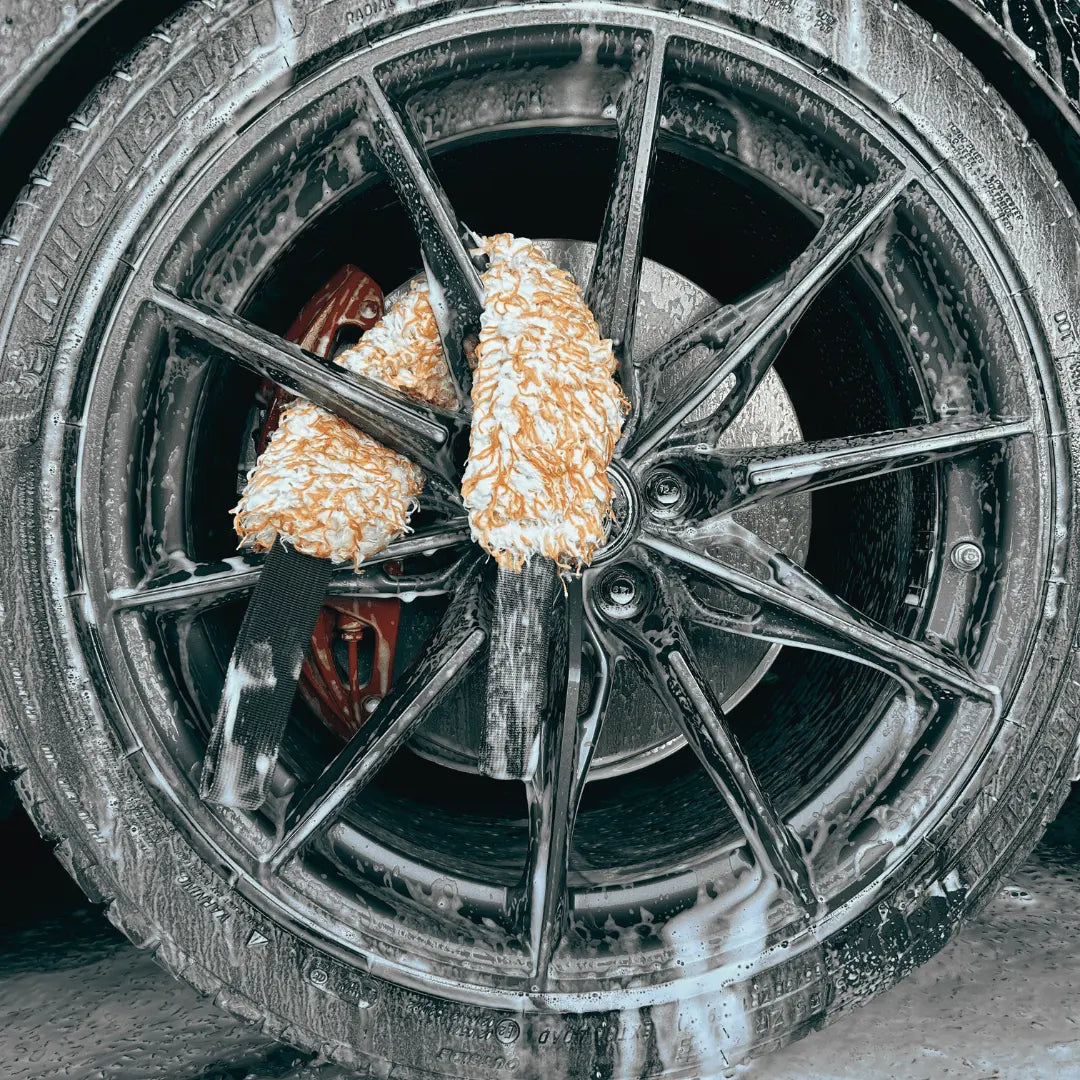
Soak your mitt in the wash bucket and work up a proper lather before it touches the wheel. A loaded mitt glides; a dry one drags.
The tool matters here. A mitt with long microfibre tails, like the Fox Tail Wheel Detailing Mitt, holds a huge amount of suds and lifts dirt up into the fibres instead of dragging it across the surface. That's the difference between cleaning a wheel and sanding one.
Reading this with dusty spokes on the driveway? Sort them this weekend.
Shop the Wheel Detailing MittWork through the spokes and tight gaps.
This is where alloys actually get dirty, and where sponges and brushes give up. Feed the mitt through the spoke openings and pull it back and forth, letting it wrap around both sides of each spoke. Reach it into the recesses a hand can't follow.
No pressure, no scrubbing. If a spot won't come clean, spray more wheel cleaner and give it another minute rather than pressing harder. Pressure is what grinds leftover grit into the finish.
★★★★★
"Brilliant! Easy to use and gets my difficult mags clean as a whistle. I'm in a Concourse in a couple of weeks so this helps enormously."
John Coughlan · Verified customer
Rinse the mitt often. Not just at the end.
During each wheel, and definitely between wheels, dunk the mitt in the plain water bucket and squeeze the grit out before reloading it with suds.
A dirty mitt is just an abrasive pad with a strap on it. A rinsed one stays safe on the surface the whole way through. This thirty-second habit is what "without scratches" actually comes down to.
Rinse the wheel, dry it, and hang your gear up.
Hose the wheel down to carry the last of the loosened grime away, then dry it with a towel you keep just for wheels. Drying is what stops water spots forming on the finish, and a wheels-only towel means brake dust never migrates to your paint.
When you're done, rinse the mitt and towels out with clean water and hang them up to dry. They'll be ready for next wash, and next wash is the point: brake dust left sitting long enough can etch the finish, so a quick clean every wash is what keeps alloys looking new for years.
Quick answers
Can I use dish soap on alloy wheels?
It'll clean them, but it strips wax and sealant and can dry out the finish over time. A proper car shampoo and wheel cleaner are made for the job and cost little more.
How often should I clean my alloy wheels?
Every wash. Brake dust is corrosive, and the longer it sits, the harder it bonds to the finish.
What's the best tool for cleaning between wheel spokes?
Hands down. The Foxtail, A soft microfibre mitt with tails that feed through the gaps. It reaches behind the spokes and into the recesses where brushes can't go, without the hard edges and stiff bristles that scratch.
Spotless rims. Zero scratches.
The Fox Tail Wheel Detailing Mitt slides through the spokes and tight gaps and lifts the grime out. Australian designed, with two in every pack, one for the wheels and one for the rest of the car.
Get the Wheel Detailing MittNew to the range? Start with 7 reasons to add a wheel mitt to your detailing routine.